 “Reformulating the visualisation of climate disasters”
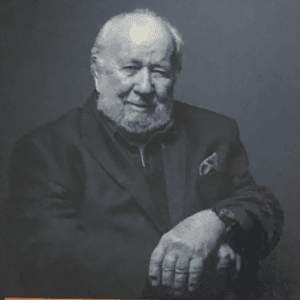
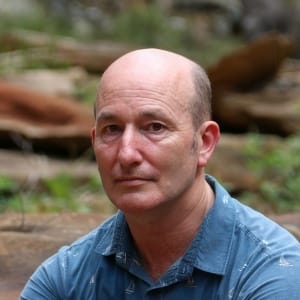
Scientia Professor Dennis Del Favero FAHA
Professor of Digital Innovation and
Executive Director, iCinema Research Centre
UNSW Sydney
Date and Time: Wednesday, 7 October 2026, 6.00–7.30 pm AEST
Venue: Michael Crouch Room, Mitchell Building, State Library of NSW, Shakespeare Place, Sydney
Pre-meeting drinks: A cash bar will operate from 5.30 pm
Registration: Information to follow
Entry: OGM: Members, $20; Non-members, $30; Students, $0
All are welcome
Summary: Climate disasters have doubled in frequency and scale since 2000 and are expected to double again by 2035. As seen in Australia 2019/2020 and in Los Angeles 2025, climate disasters such as extreme and catastrophic wildfires are new singular events whose unforeseen and ferocious life-threatening behaviour challenge picturing. Their singularity, such as unpredictable creation of new weather events, such as firestorms, resists the patterns and repetitions that make coherent aesthetic depiction and safe engagement possible. As they pose an unprecedented threat, we need to ask: “How do we aesthetically picture such singular events so that we can meaningfully understand and safely prepare?”
Artistic picturing imagines powerful engagement with known scenarios, while technological picturing, such as WRF-SFIRE simulations, abstractly maps the data patterns of typical fires. On their own, neither form of picturing can perceptually and sensorially depict the unpredictable dynamics of climate disasters and experientially engage artistic research and first response stakeholders with their uncertainty so they can safely interpret and interact. To address this gap, recent reports outline the urgent need for a form of picturing that leverages advances in art and technology.
This demands the modelling of complex processes imperceptible to human cognition, requiring the speed and scale of AI to learn patterns and render behaviours, integrated with the power of art to experientially engage stakeholders in compelling and dynamic scenarios. Professor Del Favero’s research addresses this problem through an aesthetic that fuses art and AI and enables the experiential picturing of unforeseen scenarios. By converting scientific simulations into dynamically evolving, immersive aesthetic experiences, it will allow stakeholders to generate possible ‘what if’ scenarios that rehearse unexpected threats to build anticipatory understanding and situational deliberation. This research demonstrates that an immersive visual aesthetic—where users feel pro-actively present in unanticipated settings as they interactively rehearse their engagement with threats in advance can provide open-ended experiences that enhance risk apprehension and response.
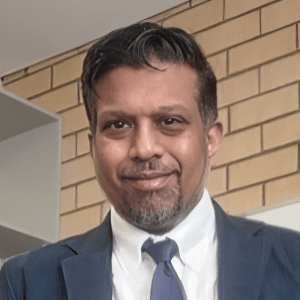
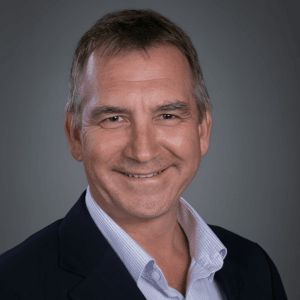
Dennis Del Favero is a research artist, Scientia Professor and ARC Laureate Fellow, Director of the iCinema Research Centre at the University of New South Wales, Sydney, Honorary Professor, University of Melbourne (Australia), Visiting Professor Royal College of Art (UK) and Editorial Board Member of Quodlibet Studio Corpi (Italy). He is the former Executive Director of the Australian Research Council | Humanities and Creative Arts and inaugural Visiting Professorial Fellow, ZKM Centre for Art and Media (Germany). His work explores the use of AI aesthetics and immersive visualisation to picture and engage with uncertain scenarios, such as extreme fires, to enhance preparedness and response. His AUD $31M in funding has delivered a range of cutting-edge projects, including: iCASTS, an immersive training system for the Australian and Chinese mine industries, educating 30,000 miners, reducing injury by 65% with no fatalities; iDesign, a 3D stage design prototyping system for Sydney Theatre Company; iFire, a 3D immersive simulation system for the international emergency sectors, for training 7,000 firefighters; netARCHIVE, a networked display system for multi-located museum collection experience for Powerhouse Museum, Sydney; and memorySCAPE, an intelligent memorialisation database VR system for the Australian War Memorial, Canberra. These outputs form part of significant commercialisations of immersive visualisation technologies, such as with Shenyang Design & Research Institute of the China Technology & Engineering Group. His work has been exhibited in over 140 major exhibitions, including Sprengel Museum Hannover and the Smithsonian. He is represented by Galerie Schenkweitzdoerfer, Cologne and Gallery Mais Wright, Sydney.


| Royal Society of New South Wales | |
| Date: | Wednesday, 07 October 2026, 06:00 PM |
| Venue: | Michael Crouch Room, Mitchell Building, State Library of NSW, Shakespeare Place, Sydney |
| Entry: | Members, $20; Non-members, $30; Students, $0 |
In Person Event
All are Welcome

 31 December 2026
 Various face-to-face and online venues