 Fusion energy: Billions in private cash is flooding into fusion power. Will it pay off?
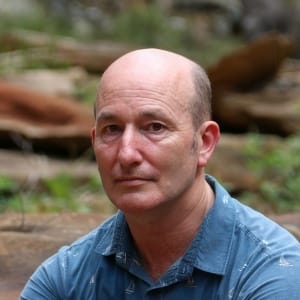
Professor Matthew Hole
ANU Mathematical Sciences Institute and School of Computing
Australian National University
Date: Wednesday, 18 February 2026, 5.30 for 6.00–8.00 pm AEDT
Venue: Sydney Masonic Centre, 66 Goulburn Street, Sydney NSW 2000
Entry: No charge
Enquiries: via email to the Australian Nuclear Association through the registration contact form
Registration: on the ANA Trybooking registration site
All are welcome
Summary: Over the past five years, private-sector funding for fusion energy has exploded. The total invested has exceeded US$10 billion (A$15 billion), from a combination of venture capital, deep-tech investors, energy corporations and sovereign governments.
There are several drivers: increasing urgency for carbon-free power, advances in technology, new materials, improved control methods using artificial intelligence (AI), a growing ecosystem of private-sector companies, and a wave of capital from tech billionaires. This comes on the back of demonstrated progress in theory and experiments in fusion science.
Taming fusion for energy production is hard. Nature achieves fusion reactions in the cores of stars, at extremely high density and temperature and at astrophysical scale.
So far, fusion experiments have yet to continuously produce more energy than required by auxiliary heating to make the fusion reaction happen. The highest gain to date is 0.67, although gains above well unity have been demonstrated in brief pulses using high-powered lasers (a different technology path).
The public program most likely to demonstrate the scientific and technical basis for fusion energy is the ITER project. While the project has seen some delays, the vessel segments are being put together in record time. Research operations are now expected to begin in 2034, with deuterium–tritium fusion operation slated for 2039.
In tandem to ITER are several government projects, including the massively ambitious Chinese experiment Burning Experimental Superconducting Tokamak (BEST), the Commonwealth Fusion System’s SPARC tokamak, which has attracted some US$3 billion in investment, including Australian private money, and the recent US$6bn merger of Helion Energy with Trump Media. These initiatives promise an accelerated timeline and very high returns — but have a high risk of failure. Even if they don’t meet their lofty goals, these projects will still accelerate the development of fusion energy by integrating new technology and diversifying risk.
In the long term, we have good reasons to pursue fusion energy – and to believe the technology can work. Despite this promise, Australian public investment has flatlined. It would be foolhardy for the nation that co-discovered fusion, with enormous mineral resource potential, to both support global decarbonisation and make a profit, to not have at least some skin in the game.

Matthew Hole is a professor at the Australian National University’s Mathematical Sciences Institute and School of Computing. Professor Hole holds degrees in physics, mathematics, and electrical engineering, and completed a PhD on plasma centrifuge physics at the University of Sydney.
From 2001–2002, Dr Hole worked for the UK Atomic Energy Authority on fusion power on the innovative spherical tokamak concept. From 2003–2004, Dr Hole worked on space plasma physics for the School of Physics at the University of Sydney. Since 2005, he has worked with Professor Dewar of the Plasma Theory Modelling Group at ANU, which Professor Hole now leads.
Professor Hole is the inaugural Chair of the Australian ITER Forum (https://fusion.ainse.edu.au/), a growing consortium of over 180 scientists and engineers drawn from universities, government research laboratories, private industry, and the general public. The Forum seeks to promote the science of fusion energy through advocacy of Australian involvement in the world’s largest science project: the next step fusion energy experiment, ITER.
He is the Australian member of the International Fusion Research Council of the IAEA, and a member of the Board of Editors for Plasma Physics and Controlled Fusion.


| Australian Nuclear Association | |
| Date: | Wednesday, 18 February 2026, 06:00 PM |
| Venue: | Sydney Masonic Centre, 66 Goulburn Street, Sydney NSW 2000 |
| Entry: | No charge |
In Person Event
All are Welcome
 31 December 2026
 Various face-to-face and online venues