
 March 15, 2026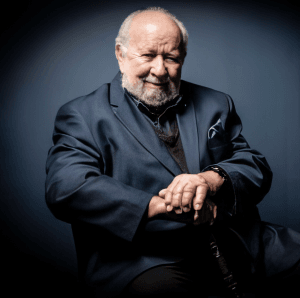
20 August 1943 – 7 March 2026
Remembering a modern polymath
A former Councillor of the Royal Society of NSW and a member of the Council of the Royal Societies of Australia (RSA), Emeritus Professor Stephen Craig Hill AM FRSN has died suddenly at the age of 82. Stephen joined the Society in 2015 and brought his enormously diverse international experience and knowledge to both organisations. In recent times, Stephen made major contributions to the RSA’s Pre-conditions of Well-being project.
Stephen Hill graduated with First Class Honours in Physical Chemistry from the University of Sydney in 1964 and then taught chemistry at Sydney and Melbourne Universities. After qualifying in Australia’s first MBA program in 1965 with a thesis in economics, he was subsequently awarded Australia’s first PhD in Business Administration, completed in 1967 at the University of Melbourne. He was subsequently awarded Fulbright Foundation and Ford Foundation Intersocietal Fellowships and appointed an Assistant Professor in Sociology, Business and Industrial Engineering in parallel positions at Northwestern University in Chicago.
After being awarded a Nuffield Fellowship, he took up a Senior Lectureship in sociology at UNSW and then became Australia’s youngest full Professor at the age of 30 as Foundation Professor of Sociology at the University of Wollongong in 1974. He subsequently set up three Research Centres – ‘Multicultural Studies’ in 1978, ‘Technology and Social Change’ in 1983, and ‘The Centre for Research Policy’, a Centre of Excellence of the Australian Research Council, in 1990.
Stephen was the Principal Director and Ambassador for South-east Asia with UNESCO from 1995 to early 2006. Based in Indonesia and Paris, he served as the UN’s Regional Director for Science for Asia and the Pacific, and as Representative or Ambassador to Indonesia, Malaysia, Philippines, Brunei Darussalam, Timor Leste and Special Representative of the Director-General to Singapore. He was responsible for major UN science, education, media freedom, culture, world heritage and peace initiatives and reforms in the region, as well as being formally mandated by UNESCO’s Director-General to reform and decentralise the entire UN Agency globally from 1999 to 2002.
Stephen founded and chaired International Networks in Science and Technology Policy (UN), Social Sciences and Humanities (Pacific Science Association), co-chaired Australia’s UNESCO Science Network, and was then involved in the founding of APEC, where he chaired the APEC Human Resources and Technical Education Network and Programs. Additionally, he was central to the establishment of Australia’s science relations with China, Indonesia, Korea and Malaysia, part of the basis on which his Membership of the Order of Australia was awarded.
During his time working in UNESCO, he was responsible, as UN Representative, for negotiations for the release of his staff taken hostage by Freedom Fighters into the jungles of West Papua in 1996. He was also responsible for managing the UN response to the May 1998 Democracy Revolution in Indonesia – escaping his house at 2:00 am through mobs and fires, evacuating all staff but staying to report to the UN Security Council, and in the aftermath launching a wide-ranging program to reform the law and establish media freedom throughout Indonesia. Examples of work in other Asian countries include the development of a program to bring literacy to 7,000 village women in the war zones of Mindanao, southern Philippines; reforming Mongolia’s entire science system out of its Soviet-inherited past and into contemporary relevance; and introducing the internet into North Korea.
Following retirement from UNESCO, Stephen was appointed Honorary Professorial Research Fellow at the University of Wollongong in January 2006 and subsequently created an Emeritus Professor at that university in 2008.
Stephen published extensively across diverse fields, including global economics, social dynamics, and the values driving social change, and has been translated into six languages. His bibliography includes over 20 books, many of which explore his own real-life adventures, as well as several hundred research papers.
In addition to his writing, Stephen was committed to engaging with communities through public talks on contemporary issues. His storytelling ability, combined with his deep understanding of global affairs, made him a compelling voice in discussions on humanity and social change. To that end, he proposed the establishment of a ‘speakers forum’ for the Royal Society of NSW.
Stephen was honoured with several awards from Australia, Indonesia, Vietnam and the Philippines for his contributions to Australia and the Asian region – including Member of the Order of Australia (1996) and Australia’s Centenary Medal (2000). He was elected Fellow of several international Academies and Societies, including the Australian Academy of Technological Sciences and Engineering, the World Innovation Foundation, and the Royal Society of NSW.
Stephen was formally named ‘Purba’ after the last King in a ‘Ulos Naming Ceremony’ by the Batak Nation of Sumatra, Indonesia, and honoured by indigenous tribute ceremonies, including from the Dani Tribe of West Papua, which ceremonially inducted him as an Honorary Tribal Chief.
Stephen lived and worked in the USA, the UK, Germany, France, India, Thailand, Indonesia, Malaysia and Australia. He was a Visiting Professor of Doshisha and Kyoto Universities in Kyoto, Japan, where he recently co-led an International Symposium and Writing Program on Creative Economics.
Stephen’s CV also includes a stint as a rock musician. During the late 1970s and early 1980s, he was a professor by day and a professional rock musician by night. Stephen’s passions for community empowerment and human rights initiatives were a driving force in his life. He was indeed a veritable polymath with skills and influence spanning chemistry, economics and social science at a global level.
Requiescat in pace
Funeral service: Relatives and friends are invited to attend Stephen’s funeral service to be held at University Hall, Building 11, University of Wollongong Main Campus, on Wednesday, 18th March 2026 at 11:00 am. For those unable to attend, the family invite you to view Stephen’s service via the link found on funeralannouncement.com.au
With thanks to Emeritus Professor Tony Hulbert FRSN for background information.
John Hardie AM FRSN


