 “Ecosystem restoration at scale, reintroducing native species and managing threats – nearly a decade of the Wild Deserts project ”
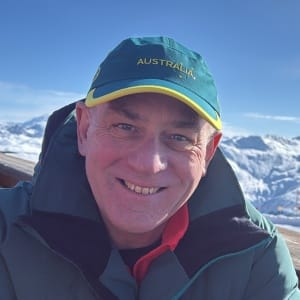
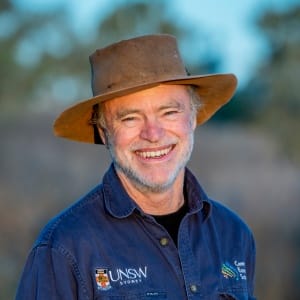
Scientia Professor Richard Kingsford AO FRSN
Director, Centre for Ecosystem Science
School of Biological, Earth & Environmental Sciences
UNSW Sydney
Date and Time: Wednesday, 2 September 2026, 6.00–7.30 pm AEST
Venue: Michael Crouch Room, Mitchell Building, State Library of NSW
Pre-meeting drinks: A cash bar will operate from 5.30 pm
Registration: Please register before 2.00 pm AEST on Wednesday, 2 September 2026
Entry: OGM: Members, $20; Non-members, $30; Students, $0
Enquiries: via email to RSNSW Events
All are welcome
Business of the Meeting
The Agenda for the Ordinary General Meeting is now available on the Meetings page of the website.
Summary: Australia has the world’s most notorious extinction record for mammals, driving widespread functional loss in our desert ecosystems. The Wild Deserts project is a nationally significant ecological restoration initiative in the Strzelecki Desert of the Sturt National Park in far‑northwestern New South Wales. Established in 2016, this project is led by UNSW’s Centre for Ecosystem Science and Ecological Horizons, collaborating with the NSW National Parks and Wildlife Service (NPWS) and Taronga Conservation Society. The Wild Deserts Program represents one of the most ambitious attempts to restore arid ecosystems in Australia. It was designed not only to reintroduce seven locally extinct species, but to restore ecosystem function at a landscape scale, through integrating species’ reintroductions, threat management, particularly feral cats, and adaptive data-driven decision-making. This presentation focuses on the successes and failures of ecosystem restoration at large scales, reflecting the vision of the Wild Deserts Project.
Richard Kingsford is a Scientia Professor at UNSW Sydney and the Director of the Centre for Ecosystem Science. He is a conservation biologist who has worked extensively on ecosystem restoration and threatening processes in Australia. He has led projects in aerial surveys of waterbirds, informing river management, reintroduction of platypuses and reintroductions of locally extinct mammal species. He has expertise in the conservation of ecosystems, particularly freshwater aquatic ecology. He has worked with many different communities and governments across Australia on the conservation management of ecosystems. His research has influenced conservation policy and management, including through involvement on state and federal advisory committees. He leads the Wild Deserts Partnership, focusing on restoring seven locally extinct mammal species to Sturt National Park in far western New South Wales and monitoring, evaluation and research for water for the environment in the Macquarie River and Lower Balonne.
Richard has been a Fellow of the Royal Society of NSW since 2020. His work has been acknowledged by numerous awards, including three Eureka Awards in 2001, 2008, 2015, the Hoffman Medal in 2007 for contributions to global wetland science, and in 2025 he was made an Officer of the Order of Australia (AO) for ‘distinguished service to conservation biology, to environmental sustainability research, and to freshwater biodiversity and ecosystems governance.’ Richard is also the inaugural winner of the Royal Society of NSW Life Sciences Award in 2025.


| Royal Society of New South Wales | |
| Date: | Wednesday, 02 September 2026, 06:00 PM |
| Venue: | Michael Crouch Room, Mitchell Building, State Library of NSW, Shakespeare Place, Sydney |
| Entry: | Members, $20; Non-members, $30; Students, $0 |
In Person Event
All are Welcome
 31 December 2026
 Various face-to-face and online venues